Keyword Difficulty Explained: How to Find SEO Opportunities That Actually Rank
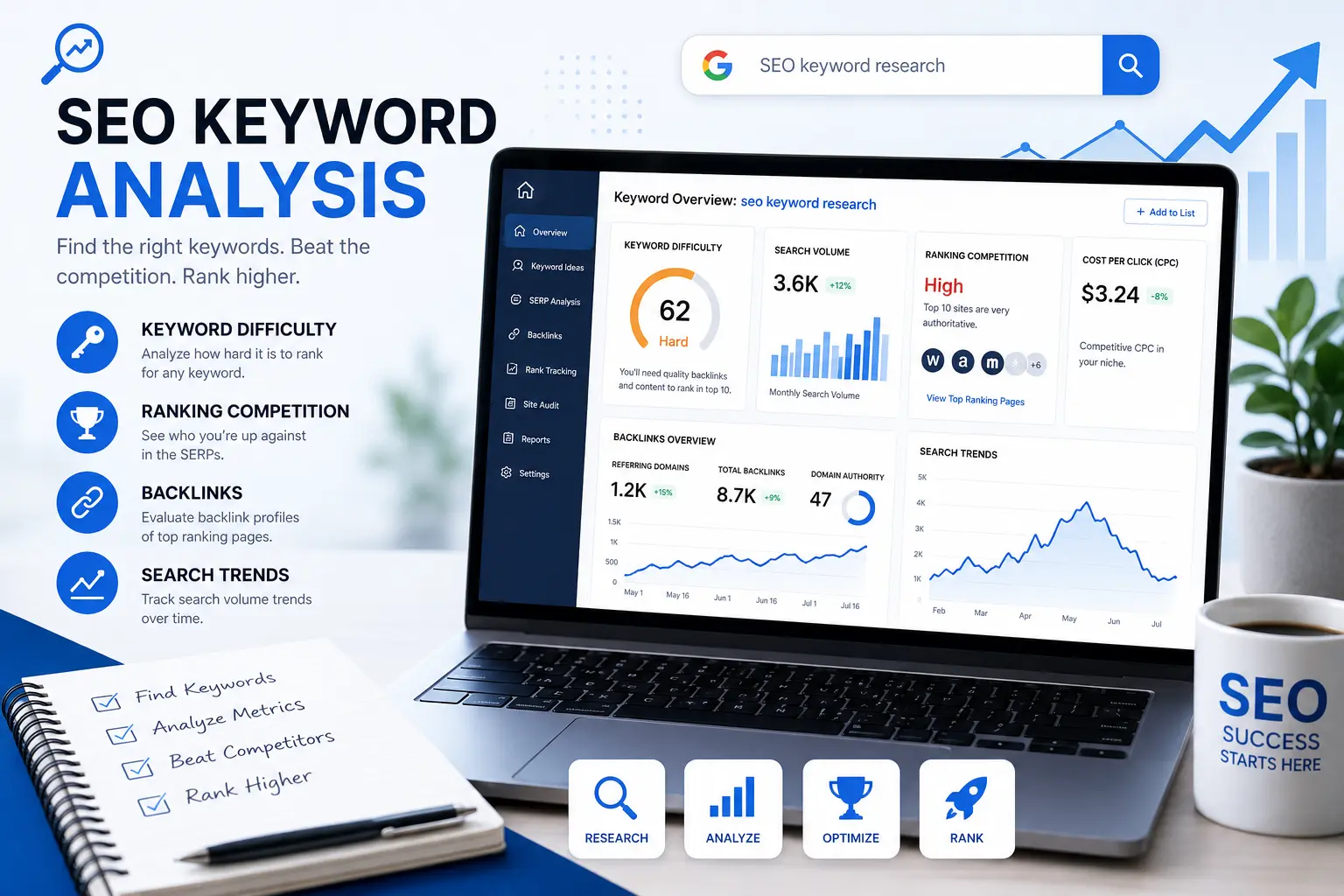
Keyword difficulty analysis dashboard for SEO research

Search traffic rarely goes to the “best” article. Most of the time, it goes to the page that best matches intent and has enough authority to compete. That’s where keyword difficulty becomes important. Many websites fail before they gain traction because they target impossible keywords too early. A new blog tries to rank for “digital marketing,” a small SaaS company targets “CRM software,” or a niche store competes against global retailers with decades of authority. The problem is not content quality alone. The problem is competition. Understanding keyword difficulty helps you avoid wasting months on keywords you realistically cannot rank for yet. Keyword Difficulty Meaning in SEO Keyword difficulty is an SEO metric that estimates how hard it would be to rank on the first page of search results for a specific keyword. The score is usually presented on a scale from 0 to 100: Different SEO tools calculate this score differently, but most systems analyze: The higher the score, the stronger the competing pages tend to be. Why Keyword Difficulty Matters More Than Search Volume A keyword with 50,000 monthly searches looks attractive until you realize the first page is controlled by: A lower-volume keyword with weaker competition often delivers faster results and better conversion potential. For example: Keyword Search Volume Difficulty Opportunity “running shoes” Very High Extremely Hard Low for small sites “best running shoes for flat feet women” Moderate Medium Much better “lightweight trail shoes for beginners” Lower Easier High potential Smart SEO is usually about achievable rankings, not vanity keywords. Keyword Difficulty in SEO: What Actually Influences It? Most SEO tools use proprietary formulas, but the underlying signals are surprisingly consistent. 1. Backlink Profiles If the top-ranking pages have thousands of referring domains, the keyword becomes harder to compete for. Google still uses backlinks as a strong authority signal. 2. Domain Authority of Competitors A SERP dominated by powerful websites creates a difficult environment for newer sites. Examples include: Even excellent content struggles against deeply trusted domains. 3. Search Intent Alignment Some keywords appear easy numerically but are difficult because Google strongly prefers a specific content format. For instance: If your page format does not match user intent, ranking becomes harder regardless of authority. 4. Content Depth and Freshness Competitive SERPs often contain: Thin content rarely survives in high-difficulty spaces. 5. SERP Features Featured snippets, AI overviews, video carousels, and shopping blocks reduce organic visibility. Sometimes the issue is not ranking difficulty — it is click difficulty. What Is a Good Keyword Difficulty Score? The answer depends on your website’s authority level. For New Websites Target keywords in the: This builds topical authority faster. For Growing Websites Once your site has backlinks and indexed content, you can gradually pursue: This is often the strongest growth phase for organic SEO. For Established Websites High-authority sites can compete for: But even large websites still rely heavily on strategic keyword clustering. Why Long-Tail Keywords Often Win A common SEO mistake is chasing traffic instead of precision. Long-tail keywords usually offer: Example: Instead of targeting: “keyword research” A smarter early-stage strategy could target: These phrases align better with user intent and realistic ranking opportunities. Free Keyword Difficulty Checker Tools Worth Using Several SEO platforms offer free or partially free keyword difficulty analysis. Popular Options These tools estimate competition differently, so scores may vary. A keyword rated “28” in one platform may appear as “41” elsewhere. The score itself matters less than the SERP reality. How to Evaluate Keyword Difficulty Manually SEO tools help, but manual analysis gives better context. Here’s a faster way to evaluate real ranking potential. Check the Top 10 Results Look for: These are signs the SERP may be vulnerable. Analyze Content Quality Ask: Weak content inside a medium-difficulty SERP creates opportunities. Evaluate Search Intent Consistency If Google shows mostly: Then your page must follow that pattern. Intent mismatch quietly destroys rankings. The Hidden Problem With Keyword Difficulty Scores Many marketers treat difficulty scores as absolute truth. They are not. Two keywords with the same difficulty score can have completely different ranking realities. For example: SEO tools simplify competition into numbers, but Google evaluates far more contextually. <u>Keyword difficulty is a directional signal — not a guarantee.</u> How Topical Authority Changes Keyword Difficulty As your website gains authority within a niche, difficult keywords become easier to rank. For example: A site with 200 articles about fitness may rank for competitive exercise terms more easily than a general website with higher domain authority. Google increasingly evaluates: This is why focused niche sites often outperform broader websites. Practical Keyword Difficulty Strategy for Smaller Websites A smarter growth strategy looks like this: Phase 1: Easy Long-Tail Keywords Build indexed content and early authority. Phase 2: Topic Clusters Create interconnected articles around a core subject. Phase 3: Mid-Difficulty Targets Expand into competitive commercial phrases. Phase 4: Authority Keywords Compete for broad industry-level searches. This layered approach compounds SEO strength over time. Final Thoughts on Keyword Difficulty The goal is not to find the easiest keyword. The goal is to find the best balance between: Many websites grow faster by targeting winnable keywords consistently instead of chasing impossible search terms. Keyword difficulty is ultimately a filtering system. It helps you prioritize opportunities where your content has a realistic chance to earn visibility. And in modern SEO, strategic realism usually outperforms aggressive ambition. FAQs: Summary: Keyword difficulty helps SEO professionals evaluate how competitive a keyword is before investing time into content creation. Understanding search intent, SERP quality, backlinks, and topical authority allows websites to target realistic opportunities and build organic growth strategically.
How Long Tail Keywords Drive Better SEO Traffic and Higher Conversions

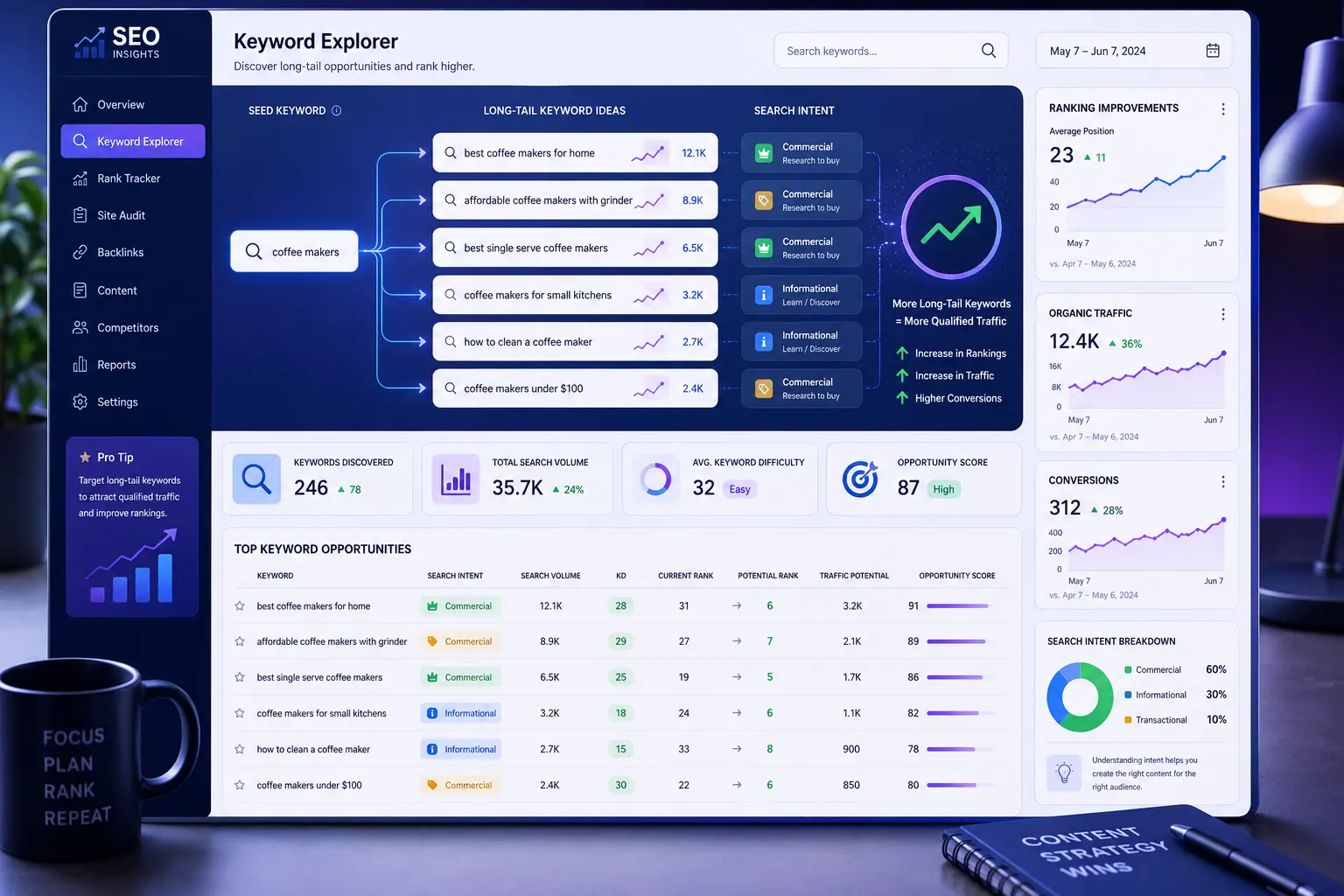
Illustration showing long tail keywords improving SEO rankings and targeted traffic

Search visibility is no longer a game of chasing the biggest keyword with the highest search volume. The websites gaining traction today are often targeting specific search intent instead of broad popularity. That shift is exactly why long tail keywords have become one of the most effective tools in modern SEO. A broad keyword like “shoes” attracts massive competition and unclear intent. A phrase like “best waterproof trail running shoes for winter hiking” attracts fewer searches — but the people searching it are far more likely to take action. That difference matters. Modern search engines reward relevance, contextual depth, and intent alignment. Long tail keyword strategies naturally support all three. What Are Long Tail Keywords? Long tail keywords are highly specific search phrases that usually contain three or more words. They target narrow search intent rather than broad topics. Examples: These phrases may individually have lower search volume, but collectively they make up a massive percentage of all online searches. In practice, users searching long-tail phrases are often: That makes them extremely valuable for SEO and conversion optimization. Long Tail Keywords vs Short Tail Keywords Understanding the difference between broad and specific search terms is critical for keyword strategy. Keyword Type Example Search Intent Competition Conversion Potential Short Tail Keyword “headphones” Broad Very High Low to Medium Long Tail Keyword “best wireless headphones for gym workouts” Specific Lower High Why Broad Keywords Are Difficult Short keywords often: A keyword like “insurance” could mean: Search engines must guess intent. Long-tail phrases remove ambiguity. Why Long Tail Keywords Matter in SEO The real advantage of long tail keywords in SEO is intent precision. Search engines increasingly prioritize: Long-tail content aligns naturally with these ranking systems. 1. Easier Rankings for Newer Websites Competing for broad keywords is expensive and difficult. Long-tail phrases often: This creates ranking opportunities for smaller sites. 2. Higher Conversion Rates Specific searches usually signal stronger intent. Compare these: The second user is much closer to purchasing. That means long-tail traffic frequently converts better for: 3. Better Alignment With Voice Search Voice searches tend to be conversational. People say: These are naturally long-tail searches. As conversational search grows, long-tail optimization becomes even more important. 4. Stronger Semantic Topical Authority Google evaluates topics holistically. A site targeting many related long-tail phrases builds: For example, a fitness blog targeting: signals stronger expertise around the broader topic of creatine supplementation. Long Tail Keyword Examples Across Industries Ecommerce SaaS Local SEO Blogging These examples show how long-tail keywords capture very focused user intent. How to Find Long Tail Keywords Finding quality long-tail opportunities requires understanding how users search, not just relying on keyword volume metrics. Use Google Autocomplete Start typing a search query and analyze suggestions. These predictions are based on real user behavior. Example:Typing “best laptops for…” may reveal: Those modifiers reveal intent layers. Analyze “People Also Ask” Google’s question boxes reveal: These are excellent sources for: Use SEO Tools Strategically Platforms like: can help identify: The best opportunities usually combine: Mine Customer Language One overlooked tactic is studying how real customers describe problems. Look at: Real-world phrasing often uncovers valuable long-tail opportunities competitors ignore. How to Use Long Tail Keywords Naturally Over-optimization hurts readability and trust. Instead of repeating the exact phrase constantly: For example, if targeting:“best standing desk for small spaces” you can naturally include: Modern SEO relies more on contextual understanding than mechanical repetition. Short Tail vs Long Tail Keywords: Which Should You Prioritize? This is not an either-or decision. Strong SEO strategies use both. Short Tail Keywords Useful for: Long Tail Keywords Useful for: The smartest strategy usually starts with long-tail coverage, then expands toward broader authority topics over time. Common Mistakes With Long Tail Keywords Targeting Keywords With No Real Intent Some phrases may have traffic but weak value. Always ask: Stuffing Exact Match Keywords Repeating exact phrases excessively makes content unnatural. Search engines now prioritize: Not robotic repetition. Ignoring Search Intent A keyword may sound transactional while users actually want information. For example:“best protein powder” could require: Intent matters more than the keyword alone. Building a Long Tail Keyword Strategy That Scales The most effective SEO sites build clusters instead of isolated pages. Example topic cluster: Core Topic: Home Workouts Supporting Long Tail Articles: This creates: Over time, Google associates the site with expertise around the entire topic. Final Thoughts Long tail keywords are not just “smaller keywords.” They represent: As search engines continue moving toward intent-based results, specificity becomes a competitive advantage. Broad traffic can look impressive. Relevant traffic builds businesses. FAQs: What are long tail keywords in SEO? Long tail keywords are highly specific search phrases, usually containing three or more words, that target precise user intent and often have lower competition. Why are long tail keywords important? They help websites rank more easily, attract targeted visitors, and improve conversion rates because users searching specific phrases usually know what they want. What is the difference between short tail and long tail keywords? Short tail keywords are broad and highly competitive, while long tail keywords are more specific, less competitive, and often convert better. Do long tail keywords have lower search volume? Usually yes, but collectively they account for a large percentage of all searches online and often generate more qualified traffic. How do I find long tail keyword ideas? You can use Google autocomplete, SEO tools, People Also Ask sections, forums, Reddit discussions, and customer questions to discover long-tail opportunities. Are long tail keywords good for new websites? Yes. Newer sites often rank faster for long-tail searches because competition is lower compared to broad keywords. Summary:Long tail keywords help websites attract highly targeted visitors through specific search intent. They improve ranking opportunities, increase conversion potential, support semantic SEO, and help build topical authority over time. A balanced SEO strategy combines both short-tail and long-tail keyword targeting for sustainable growth.

Keyword Intent: Why Search Behavior Matters More Than Keyword Volume

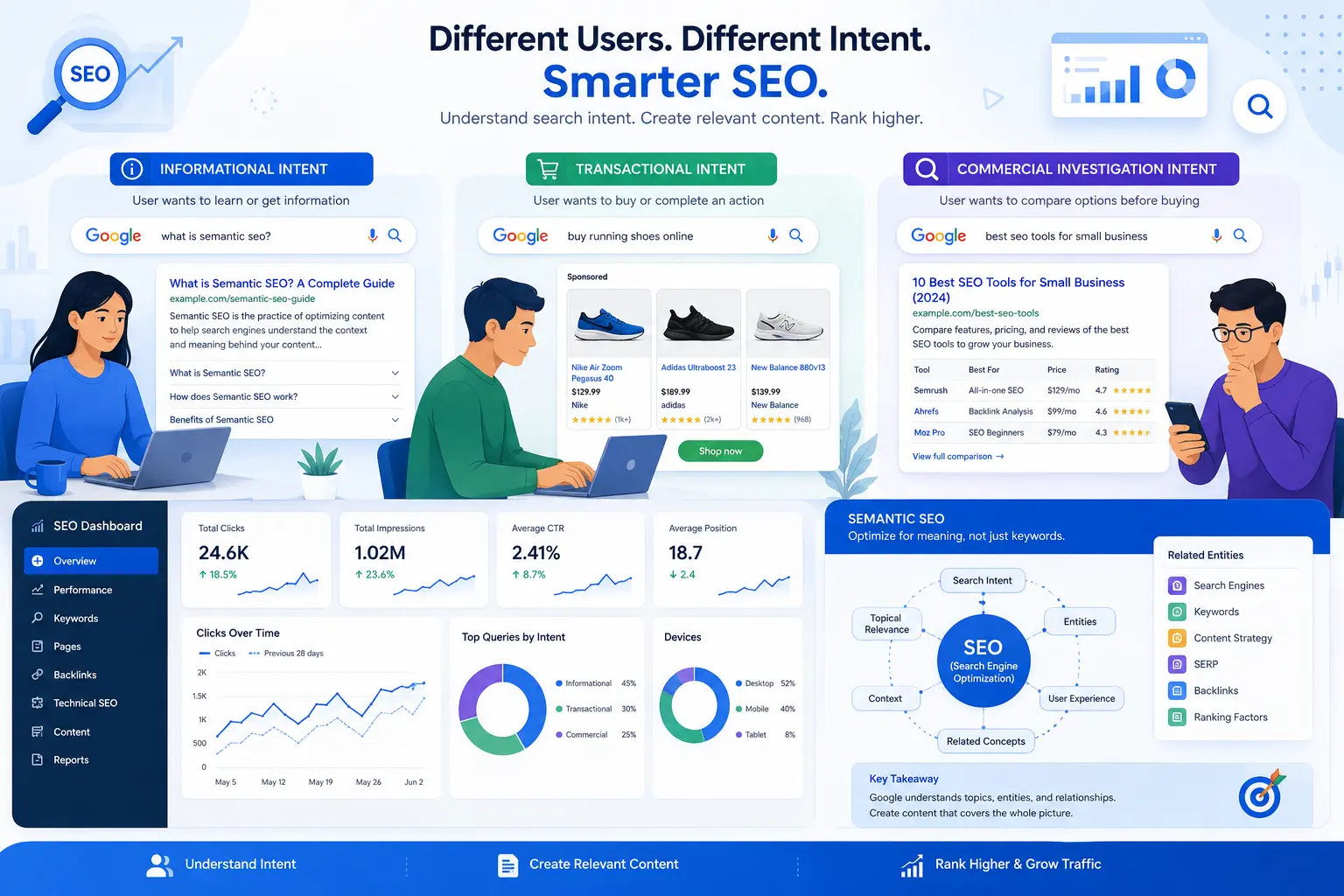
Illustration showing users searching with different keyword intents in SEO

A page can rank for thousands of terms and still fail. That usually happens when the content targets keywords but ignores keyword intent — the reason someone searched in the first place. Modern search engines are no longer matching pages only by phrases. They evaluate behavior patterns, topical relevance, user satisfaction, and contextual meaning. A keyword without intent alignment is just text. A keyword with intent alignment becomes discoverable, clickable, and useful. This is where many SEO strategies quietly break down. A page optimized for “best running shoes” cannot behave like a product manual. A user searching “how running shoes affect knee pain” is in a completely different decision stage than someone typing “buy lightweight running shoes size 10.” Same topic. Different intent. Different expectations. Understanding this distinction changes how content should be planned, written, optimized, and structured. What Is Keyword Intent? Keyword intent refers to the purpose behind a search query. It answers the deeper question: What does the user actually want when typing this into Google? Search engines analyze this continuously through: This is why two pages targeting similar SEO keywords can perform dramatically differently. The intent behind the search shapes: The Four Core Types of Search Intent Understanding the categories of search intent helps create content that matches user expectations more precisely. 1. Informational Intent The user wants to learn something. Examples: Best content formats: The goal here is clarity and trust, not immediate selling. 2. Navigational Intent The user already knows where they want to go. Examples: These searches are destination-focused. Ranking for navigational searches is usually dominated by brand authority. 3. Transactional Intent The user is ready to take action. Examples: These searches have strong commercial value because the user is closer to conversion. Content should focus on: 4. Commercial Investigation Intent This is the research phase before purchase. Examples: The user is evaluating options. This stage often produces the highest long-term SEO value because it attracts highly engaged visitors. Why Keyword Intent Matters More Than Exact Match Keywords Years ago, SEO focused heavily on exact phrases. Today, Google understands: A page optimized aggressively for google search keywords without satisfying intent often loses rankings over time. Search engines now prioritize: This means:<u>Intent matching is now a ranking factor indirectly reinforced through user behavior.</u> How Google Interprets User Intent Google evaluates intent using multiple layers of analysis. Query Structure The wording itself reveals intent. Examples: SERP Patterns Google studies which content formats users prefer for specific queries. If users consistently click: …Google adapts the search results accordingly. That means your content format must align with the dominant SERP behavior. Engagement Signals Search engines monitor: If users return immediately to search results, the page may not satisfy intent effectively. Keyword Intent vs Search Volume High-volume keywords often look attractive on paper. But intent determines actual business value. For example: Keyword Monthly Searches Intent Quality “SEO” Very High Broad / unclear “best SEO tools for agencies” Moderate High commercial value “how to fix indexing issues” Lower Strong targeted informational intent The third keyword may generate fewer visits but higher engagement and trust. This is why advanced SEO strategies prioritize user intent over vanity traffic. How to Identify Keyword Intent Accurately Analyze the Existing Search Results Search Google and observe: If the first page is filled with tutorials, Google likely interprets the query as informational. If product pages dominate, the intent is commercial or transactional. Look for Modifier Words Intent often appears through modifiers like: These signals help classify keyword purpose quickly. Use Behavioral SEO Thinking Instead of asking: “How do I rank for this keyword?” Ask: “What outcome is the user trying to achieve?” That shift changes content quality dramatically. The SEO Mistake Most Sites Keep Repeating Many websites create: The result: A page trying to satisfy informational, transactional, and navigational intent simultaneously often confuses both users and search engines. Strong SEO pages usually solve:one dominant intent clearly and efficiently. How Keyword Intent Shapes Content Strategy Intent should influence: For example: Informational Pages Best for: Transactional Pages Best for: Commercial Investigation Pages Best for: Intent alignment creates a cleaner content ecosystem across the entire site. Semantic SEO and Intent Optimization Modern SEO increasingly relies on semantic understanding. This means search engines evaluate: A page discussing search intent naturally should also reference: This creates stronger semantic depth without keyword stuffing. The Future of SEO Is Intent-First AI-powered search systems are becoming better at: This changes SEO fundamentally. Winning pages are no longer just optimized pages. They are: The websites that understand users more accurately will outperform websites that simply repeat keywords more often. Final Thoughts Keyword research without intent analysis is incomplete. The most effective SEO strategies now begin with understanding: Search engines reward content that resolves intent efficiently. That means the real competitive advantage is no longer keyword density. It is relevance, usefulness, and alignment with human behavior. FAQs: Summary:Keyword intent is the foundation of modern SEO strategy. Understanding why users search helps create more relevant, engaging, and higher-performing content. Search engines increasingly prioritize intent satisfaction over exact keyword matching, making user-focused optimization essential for sustainable rankings.

How to Use a Keyword Research Tool to Find High-Intent SEO Opportunities

Keyword research tool dashboard showing search volume and SEO analytics

Traffic rarely comes from guessing. Most websites that grow consistently are built on a repeatable system: identify what people are searching for, understand why they are searching, and create content that answers the intent better than competitors. That process begins with a reliable keyword research tool. Not all keywords are valuable. Some generate impressions but no clicks. Others bring visitors who never convert. The real advantage comes from finding phrases with strong intent, realistic competition, and enough demand to justify creating content around them. This is where keyword research becomes strategic instead of mechanical. Why Keyword Research Still Matters in Modern SEO Search engines have become significantly better at understanding topics, entities, and user intent. But keywords still provide one of the clearest signals about: A good keyword strategy helps you avoid publishing content nobody searches for. It also prevents another common issue: targeting broad terms that are almost impossible to rank for. For example: The second phrase may have lower traffic, but it often produces better engagement and conversions. <u>Modern SEO rewards specificity, relevance, and intent alignment.</u> What a Keyword Research Tool Actually Does A keyword research tool helps uncover search data and related opportunities around a topic. Most tools provide: Some tools also cluster keywords semantically, which is increasingly useful for topical authority strategies. Core Metrics You Should Understand 1. Keyword Search Volume This estimates how many times a keyword is searched monthly. High volume does not automatically mean high value. Sometimes a keyword with 500 monthly searches outperforms one with 20,000 because the intent is clearer. 2. Keyword Difficulty This indicates how difficult it may be to rank on the first page. Difficulty is influenced by: 3. Search Intent This matters more than volume alone. Search intent usually falls into four categories: Intent Type Example Informational “keyword research how to” Navigational “Ahrefs keyword tool” Commercial “best free keyword tool” Transactional “buy SEO software” Content should match the dominant intent shown in search results. How to Do Keyword Research Effectively Many beginners treat keyword research like data collection. Experienced marketers treat it like audience analysis. Here’s a more effective workflow. Step 1: Start With Broad Topic Seeds Begin with general themes related to your niche. Examples: A keyword tool expands these into hundreds of variations. For example, entering “keyword research” may generate: At this stage, volume matters less than discovering patterns. Look for: Step 2: Analyze Search Intent Carefully One of the biggest SEO mistakes is creating the wrong content type for a keyword. If search results show: Google already tells you what users expect. Your job is to align with that expectation while improving usefulness. Step 3: Prioritize Low-Competition Opportunities Smaller websites should rarely start with ultra-competitive terms. Instead, focus on: Examples: These are easier entry points. Over time, topical authority compounds. Step 4: Evaluate SERP Quality, Not Just Metrics A keyword may appear competitive numerically but still have weak search results. Check: If top-ranking pages fail to fully satisfy intent, you may have an opening. This manual evaluation is where strong SEO strategists outperform automated workflows. Best Free Keyword Tool Options Worth Using You do not always need expensive software initially. Several platforms offer strong free capabilities. Google Keyword Planner Best for: Strength:Direct Google data source. Limitation:Broad search ranges unless running ads. Google Search Console Best for: This is often the most underrated SEO data source. Ubersuggest Best for: Useful for smaller content teams and bloggers. AnswerThePublic Best for: Excellent for semantic SEO and AI-search optimization. Ahrefs Free Tools Best for: Even limited free access can provide useful directional data. Why Keyword Search Volume Can Mislead You A common misconception: Higher volume always means better opportunity. Not necessarily. Consider these scenarios: Keyword Volume Intent Quality “SEO” Very High Extremely broad “best keyword research tool for bloggers” Moderate High commercial intent “keyword research free” Medium Strong beginner interest Lower-volume phrases often convert better because they represent clearer intent. <u>Relevance beats raw traffic.</u> The Rise of Semantic Keyword Research Older SEO strategies focused heavily on exact-match phrases. Modern search engines understand context much better. This means effective keyword research now includes: Instead of repeating one keyword excessively, build content depth around the broader topic ecosystem. For example, an article about keyword research may naturally include: This creates richer relevance signals. Common Keyword Research Mistakes Targeting Only High-Volume Keywords Competitive vanity terms consume resources quickly. Balance volume with attainability. Ignoring Intent A perfectly optimized article still fails if it mismatches user expectations. Intent alignment is foundational. Overusing Exact Keywords Keyword stuffing weakens readability and trust. Use natural language variations instead. Skipping Competitor Analysis Competitor research reveals: Publishing Without Topical Strategy Single isolated articles rarely build lasting SEO authority. Clusters perform better than disconnected posts. Keyword Research for AI Search and Future SEO AI-powered search systems increasingly evaluate: This changes how content should be planned. Strong keyword research today is less about inserting phrases and more about understanding: The websites that adapt early will likely gain long-term visibility advantages. A Practical Keyword Research Workflow Here’s a streamlined process many modern content teams use: Consistency matters more than finding a single “perfect” keyword. Final Thoughts A good keyword research tool does more than generate lists. It reveals how audiences think, search, compare, and decide. The real value comes from interpreting that data strategically. The strongest SEO content usually combines: Tools provide the data. Strategic interpretation creates the results. FAQs: Summary:Keyword research is no longer just about finding high-volume phrases. Effective SEO now depends on understanding search intent, topical relevance, and semantic relationships. Using the right keyword research tool helps uncover realistic ranking opportunities, build authority, and create content that aligns with how people actually search.