

Search visibility is no longer a game of chasing the biggest keyword with the highest search volume.
The websites gaining traction today are often targeting specific search intent instead of broad popularity. That shift is exactly why long tail keywords have become one of the most effective tools in modern SEO.
A broad keyword like “shoes” attracts massive competition and unclear intent. A phrase like “best waterproof trail running shoes for winter hiking” attracts fewer searches — but the people searching it are far more likely to take action.
That difference matters.
Modern search engines reward relevance, contextual depth, and intent alignment. Long tail keyword strategies naturally support all three.
What Are Long Tail Keywords?
Long tail keywords are highly specific search phrases that usually contain three or more words.
They target narrow search intent rather than broad topics.
Examples:
- “best CRM software for small law firms”
- “how to clean white sneakers without bleach”
- “budget gaming laptop under 800 dollars”
- “vegan protein powder for muscle gain”
These phrases may individually have lower search volume, but collectively they make up a massive percentage of all online searches.
In practice, users searching long-tail phrases are often:
- closer to making a decision
- looking for precise answers
- comparing options
- solving a specific problem
That makes them extremely valuable for SEO and conversion optimization.
Long Tail Keywords vs Short Tail Keywords
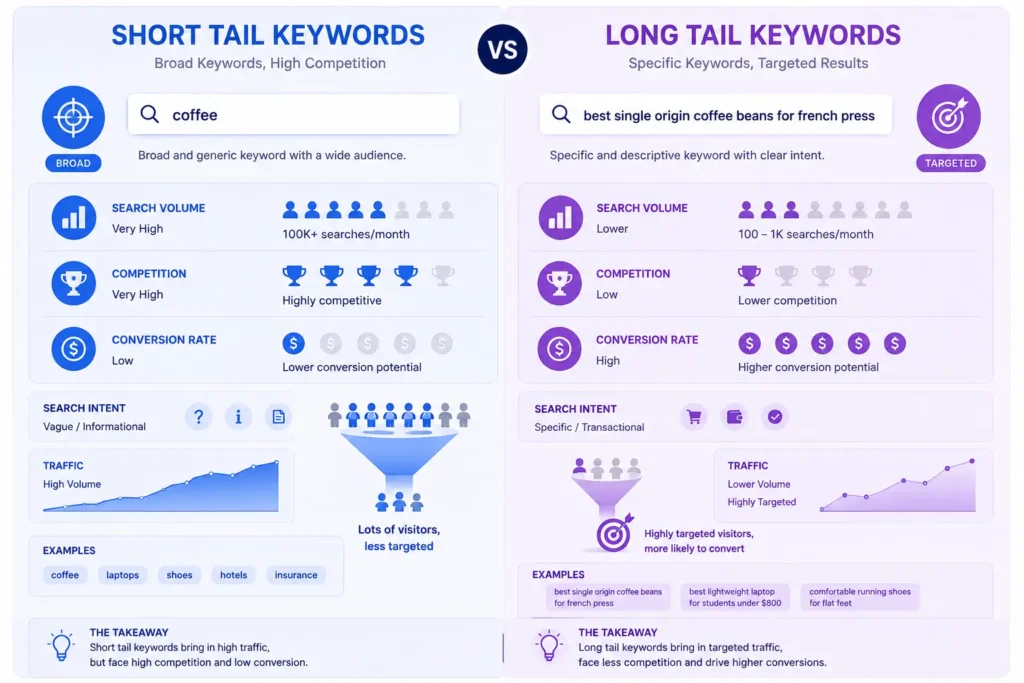
Understanding the difference between broad and specific search terms is critical for keyword strategy.
| Keyword Type | Example | Search Intent | Competition | Conversion Potential |
|---|---|---|---|---|
| Short Tail Keyword | “headphones” | Broad | Very High | Low to Medium |
| Long Tail Keyword | “best wireless headphones for gym workouts” | Specific | Lower | High |
Why Broad Keywords Are Difficult
Short keywords often:
- have enormous competition
- lack intent clarity
- attract mixed audiences
- require strong domain authority to rank
A keyword like “insurance” could mean:
- car insurance
- health insurance
- life insurance
- insurance quotes
- policy comparisons
Search engines must guess intent.
Long-tail phrases remove ambiguity.
Why Long Tail Keywords Matter in SEO
The real advantage of long tail keywords in SEO is intent precision.
Search engines increasingly prioritize:
- topical relevance
- semantic matching
- contextual understanding
- user satisfaction signals
Long-tail content aligns naturally with these ranking systems.
1. Easier Rankings for Newer Websites
Competing for broad keywords is expensive and difficult.
Long-tail phrases often:
- have lower competition
- weaker SERP saturation
- fewer authority domains targeting them
This creates ranking opportunities for smaller sites.
2. Higher Conversion Rates
Specific searches usually signal stronger intent.
Compare these:
- “coffee maker”
- “best espresso machine for small apartment kitchens”
The second user is much closer to purchasing.
That means long-tail traffic frequently converts better for:
- affiliate websites
- ecommerce stores
- SaaS companies
- local businesses
- lead generation sites
3. Better Alignment With Voice Search
Voice searches tend to be conversational.
People say:
- “What’s the best budget DSLR for beginners?”
- “How do I remove mold from bathroom tiles?”
- “Which protein powder is best for lactose intolerance?”
These are naturally long-tail searches.
As conversational search grows, long-tail optimization becomes even more important.
4. Stronger Semantic Topical Authority
Google evaluates topics holistically.
A site targeting many related long-tail phrases builds:
- topical depth
- semantic relevance
- contextual authority
For example, a fitness blog targeting:
- “best creatine for beginners”
- “creatine timing for muscle growth”
- “creatine side effects in women”
signals stronger expertise around the broader topic of creatine supplementation.
Long Tail Keyword Examples Across Industries
Ecommerce
- “minimalist leather wallet for men”
- “ergonomic office chair for lower back pain”
- “organic cotton bedsheets queen size”
SaaS
- “project management software for remote teams”
- “best invoicing app for freelancers”
- “CRM for real estate agencies”
Local SEO
- “24 hour dentist in Chicago”
- “pet grooming service near downtown Austin”
- “roof repair company for storm damage”
Blogging
- “how to start container gardening on a balcony”
- “meal prep ideas for busy college students”
- “best camera settings for indoor photography”
These examples show how long-tail keywords capture very focused user intent.
How to Find Long Tail Keywords
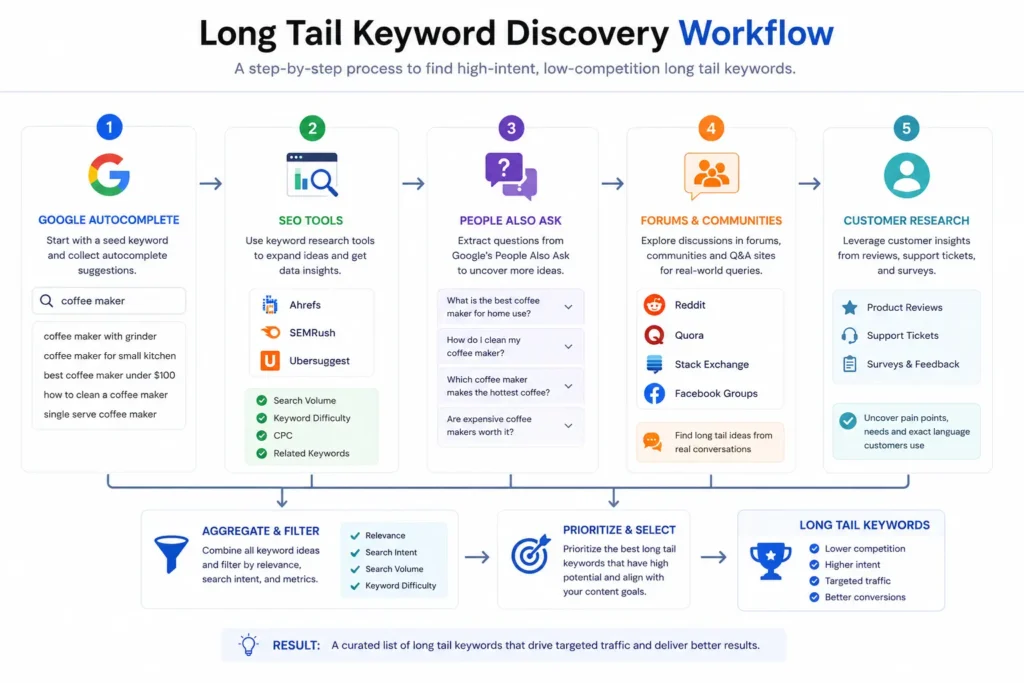
Finding quality long-tail opportunities requires understanding how users search, not just relying on keyword volume metrics.
Use Google Autocomplete
Start typing a search query and analyze suggestions.
These predictions are based on real user behavior.
Example:
Typing “best laptops for…” may reveal:
- students
- coding
- video editing
- architects
Those modifiers reveal intent layers.
Analyze “People Also Ask”
Google’s question boxes reveal:
- related concerns
- informational gaps
- semantic relationships
These are excellent sources for:
- blog subheadings
- FAQ sections
- supporting content
Use SEO Tools Strategically
Platforms like:
- Ahrefs
- Semrush
- Ubersuggest
- Google Keyword Planner
can help identify:
- low competition phrases
- question-based keywords
- purchase-intent searches
- topical clusters
The best opportunities usually combine:
- realistic competition
- clear intent
- strong relevance
- commercial or informational value
Mine Customer Language
One overlooked tactic is studying how real customers describe problems.
Look at:
- Reddit discussions
- YouTube comments
- Amazon reviews
- Quora questions
- support tickets
Real-world phrasing often uncovers valuable long-tail opportunities competitors ignore.
How to Use Long Tail Keywords Naturally
Over-optimization hurts readability and trust.
Instead of repeating the exact phrase constantly:
- use semantic variations
- answer the underlying intent
- build contextual relevance
For example, if targeting:
“best standing desk for small spaces”
you can naturally include:
- compact standing desks
- desks for small apartments
- space-saving home office setups
- adjustable desks for tight rooms
Modern SEO relies more on contextual understanding than mechanical repetition.
Short Tail vs Long Tail Keywords: Which Should You Prioritize?
This is not an either-or decision.
Strong SEO strategies use both.
Short Tail Keywords
Useful for:
- broad authority building
- homepage optimization
- large-scale branding
Long Tail Keywords
Useful for:
- blog content
- niche pages
- conversions
- topical authority
- faster ranking wins
The smartest strategy usually starts with long-tail coverage, then expands toward broader authority topics over time.
Common Mistakes With Long Tail Keywords
Targeting Keywords With No Real Intent
Some phrases may have traffic but weak value.
Always ask:
- What does the user actually want?
- Is there commercial or informational intent?
- Can your content genuinely satisfy the query?
Stuffing Exact Match Keywords
Repeating exact phrases excessively makes content unnatural.
Search engines now prioritize:
- clarity
- usefulness
- semantic coverage
Not robotic repetition.
Ignoring Search Intent
A keyword may sound transactional while users actually want information.
For example:
“best protein powder”
could require:
- comparisons
- reviews
- scientific analysis
- pricing
- beginner recommendations
Intent matters more than the keyword alone.
Building a Long Tail Keyword Strategy That Scales
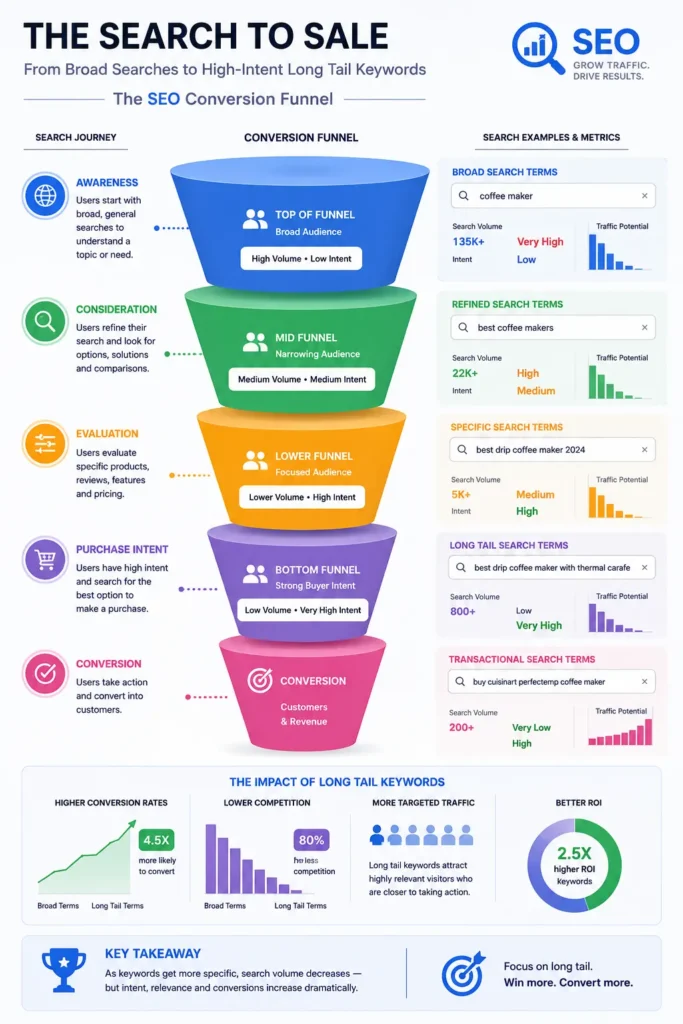
The most effective SEO sites build clusters instead of isolated pages.
Example topic cluster:
Core Topic:
Home Workouts
Supporting Long Tail Articles:
- best dumbbells for apartment workouts
- resistance band exercises for beginners
- 20 minute workouts without equipment
- home gym setup for small spaces
This creates:
- semantic relationships
- internal linking opportunities
- topical authority
- broader keyword relevance
Over time, Google associates the site with expertise around the entire topic.
Final Thoughts
Long tail keywords are not just “smaller keywords.”
They represent:
- clearer intent
- better audience targeting
- stronger conversion potential
- easier ranking opportunities
- improved semantic SEO relevance
As search engines continue moving toward intent-based results, specificity becomes a competitive advantage.
Broad traffic can look impressive.
Relevant traffic builds businesses.
FAQs:
What are long tail keywords in SEO?
Long tail keywords are highly specific search phrases, usually containing three or more words, that target precise user intent and often have lower competition.
Why are long tail keywords important?
They help websites rank more easily, attract targeted visitors, and improve conversion rates because users searching specific phrases usually know what they want.
What is the difference between short tail and long tail keywords?
Short tail keywords are broad and highly competitive, while long tail keywords are more specific, less competitive, and often convert better.
Do long tail keywords have lower search volume?
Usually yes, but collectively they account for a large percentage of all searches online and often generate more qualified traffic.
How do I find long tail keyword ideas?
You can use Google autocomplete, SEO tools, People Also Ask sections, forums, Reddit discussions, and customer questions to discover long-tail opportunities.
Are long tail keywords good for new websites?
Yes. Newer sites often rank faster for long-tail searches because competition is lower compared to broad keywords.
Summary:
Long tail keywords help websites attract highly targeted visitors through specific search intent. They improve ranking opportunities, increase conversion potential, support semantic SEO, and help build topical authority over time. A balanced SEO strategy combines both short-tail and long-tail keyword targeting for sustainable growth.